
Last Updated: November 19, 2026
Quick Summary
The signs of hidden mold after remodeling are usually a musty, earthy smell, dark streaks along fresh drywall seams, and paint that bubbles within weeks of the final coat. Hidden mold stays behind new drywall, under fresh flooring, and inside wall cavities closed before materials were fully dry. Check for these signs in the first month after a project wraps and again after the first heating season.
- A damp, earthy odor that lingers after ventilation or returns when the room is closed up points to moisture.
- Indoor humidity above roughly 60% feeds mold growth, according to the EPA.
- Fix the moisture source first, then dry the structure and prove readings match dry reference areas.
- Replace porous materials that stayed wet too long, such as drywall, insulation, carpet, and carpet pad.
- Run bathroom and kitchen exhaust fans during and for at least 20 minutes after use.
Table of Contents
- Early Signs of Mold in House After a Remodel
- How to Detect Mold Inside Walls and Other Hidden Spaces
- Mold in the House Health Effects You Should Not Ignore
- How to Get Rid of Hidden Mold in House and Prevent Its Return
- Frequently Asked Questions
Early Signs of Mold in House After a Remodel
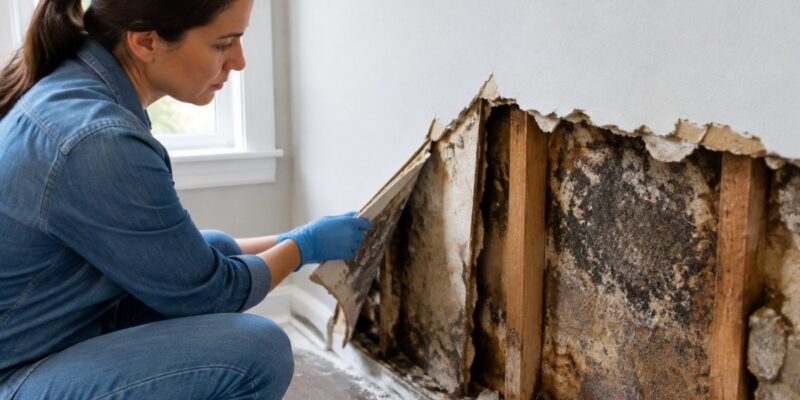
The first signs of hidden mold after remodeling usually show up as a musty, earthy smell, dark streaks along fresh drywall seams, or paint that bubbles within weeks of the final coat. The signs of hidden mold after remodeling rarely appear as a fuzzy patch on an open wall, they hide behind new drywall, under fresh flooring, and inside wall cavities closed up before the materials were fully dry.
Watch out: fresh paint and joint compound smell for days, so a musty odor can blend into “new construction smell” until the damage spreads.
How to Detect Mold Inside Walls and Other Hidden Spaces
Knowing how to detect mold inside walls starts with your senses and a flashlight, not a test kit. Run these checks in the first month after a project wraps, and again after the first heating season.
1. Smell test. A damp, earthy odor that lingers after ventilation, or returns every time the room is closed up, points to moisture.
2. Visual scan. Look for dark spots, streaks, or warping near baseboards, ceilings, and window trim, especially fresh drywall seams and the bottom inch of new walls. Blistering paint, a watermark outline, and nail pops in a line can all trace back to damp framing.
3. Touch test. Soft, bubbling, or peeling paint often hides damp drywall. A wall near plumbing chases and exterior corners that feels cooler and softer than its neighbors is worth a meter reading.
4. Moisture check. A pin-type meter pressed into drywall near plumbing and exterior walls can show elevated readings. Take a baseline in a known-dry interior wall first, then compare.
5. Humidity check. Indoor humidity above roughly 60% feeds mold growth (the EPA). A cheap hygrometer left in the room for a day tells you whether the space is drying out or staying damp.
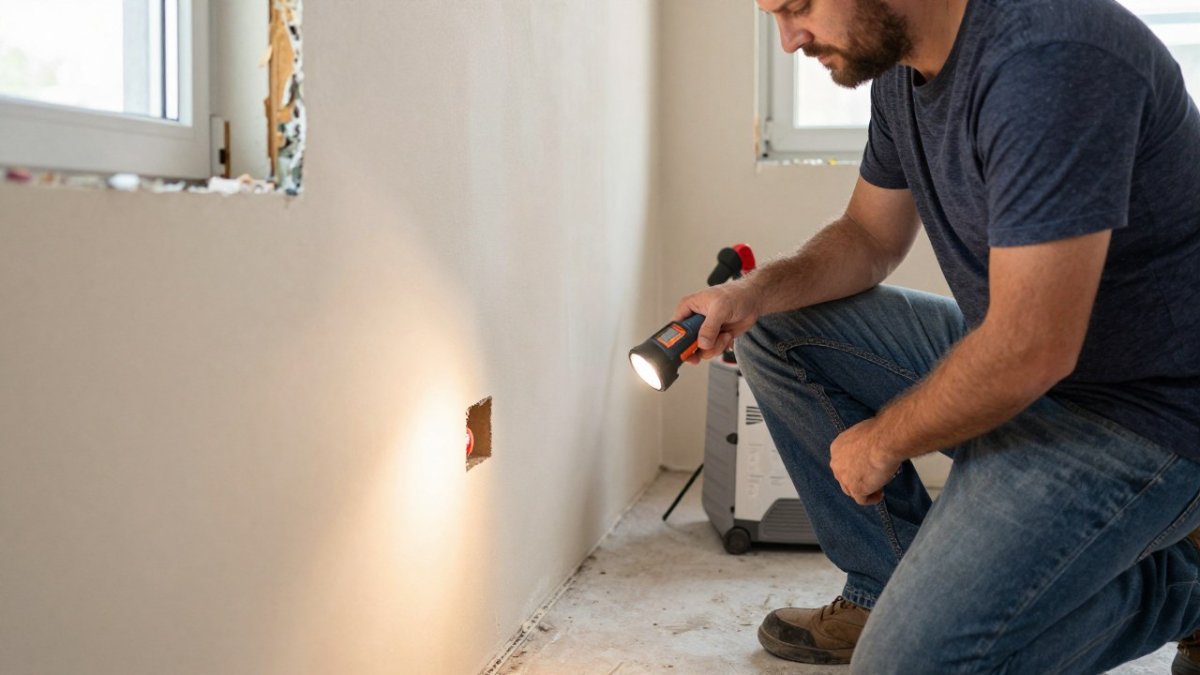
Inspect in this order, and stop when you hit a limit. Check accessible surfaces first, baseboards, trim, cabinet interiors, the attic side of ceiling drywall, and plumbing access panels. Then the mechanical side: vents, the air-handler condensate line, and the water heater pan.
Watch out: if you smell gas, see active water, or find soft, crumbling framing, shut off the water and call a professional. The same applies if anyone in the home has asthma or a compromised immune system.
What the renovation record tells you. Before probing, pull the permit history, the contractor’s daily notes, and any photos taken during framing and drywall.
These are the checks the article recommends running in the first month after a project wraps, and again after the first heating season.
| Check | What to look for | Note |
|---|---|---|
| Smell test | Damp, earthy odor that lingers after ventilation | Returns when room is closed up |
| Visual scan | Dark spots, streaks, warping near baseboards and trim | Watch fresh drywall seams and bottom inch |
| Touch test | Soft, bubbling, or peeling paint | Cooler, softer walls near plumbing chases |
| Moisture check | Pin-type meter readings near plumbing and exterior walls | Take a baseline in a known-dry interior wall |
| Humidity check | Indoor humidity above roughly 60% feeds mold | Cheap hygrometer left in the room for a day |
Mold in the House Health Effects You Should Not Ignore
Mold in the house health effects range from mild irritation to respiratory symptoms that worsen over time. Common complaints include sneezing, coughing, itchy eyes, and skin irritation, especially in people with allergies or asthma. Symptoms that ease when you leave the house and return when you come back are a red flag worth investigating.
The U.S. Environmental Protection Agency’s mold guidance explains how moisture control is the core fix, not bleach alone. If anyone in the home has ongoing breathing issues, treat the mold question as urgent.
How to Get Rid of Hidden Mold in House and Prevent Its Return
Figuring out how to get rid of hidden mold in house comes down to three steps: find the moisture source, dry the structure, then remove and replace affected materials. Cleaning visible mold without fixing the leak guarantees it returns, and the step most guides skip is verifying the source is actually gone before the wall goes back up.
Step 1, Find and correct the source. Fix leaks and water intrusion first: the obvious ones (a dripping supply line, a failed wax ring, roof flashing) and the quiet ones (a condensate line draining into a wall, a dryer vented into a crawlspace, grading that sends water against the foundation, a bathroom fan venting into the attic).
Step 2, Dry the structure, and prove it. Dry wet framing and drywall completely before closing walls. Running a dehumidifier and fans for two or three days is not proof; moisture readings should return to the baseline of unaffected framing in the same house before board goes back on.
Step 3, Remove and replace what stayed wet. Replace porous materials that stayed wet too long, drywall, insulation, carpet, carpet pad, and gypsum paper facing. Non-porous framing can often be cleaned and dried, but only after the source is corrected and the moisture reading is stable.
Watch out: painting over mold-stained drywall traps spores and hides the problem until it spreads. Same for caulking over a stained seam or installing new flooring over a damp subfloor, you are sealing the evidence, not the moisture.
Post-remediation verification. Confirm three things before closing the job. First, the moisture source was corrected, the leak is fixed, the fan vents outdoors, the grading drains away. Second, readings in the repaired area match dry reference areas after a rain or a full week of normal use. Third, the odor is gone when the room has been closed up overnight.
Prevention after a remodel. Keep indoor humidity in check with a hygrometer and a dehumidifier in basements and crawlspaces. Run bathroom and kitchen exhaust fans during and for at least 20 minutes after use. Check the condensate line and air-handler pan seasonally.
If the damage sits behind a finished wall or under flooring, a proper fix often means opening the wall, remediating, and rebuilding. Work of this kind is where residential remodeling and bathroom remodeling services can help. Before hiring anyone, read our guide on how to find a reputable local contractor and how to compare remodeling contractors effectively.
For more remodeling and home protection advice, browse the Madrid’s Contracting blog.
Hidden mold after a remodel is a moisture problem wearing a disguise. If you’ve spotted the warning signs and want the repair done right, Madrid’s Contracting brings over 35 years of family-owned experience, BBB A+ rating, and Google Guaranteed status to every job, along with certified attic ventilation expertise that helps stop moisture before it starts.
Frequently Asked Questions
What are the first signs of hidden mold after remodeling?
A musty or earthy smell that lingers after the dust settles is often the first clue. You may also notice new discoloration on drywall, bubbling paint, or warped baseboards near areas that were opened during the renovation. Because hidden mold grows inside wall cavities and under flooring, visible spots may not appear for weeks. Trust your nose and any unexplained moisture, then schedule a professional inspection if symptoms persist.
Can a musty smell mean there is mold behind new drywall?
Yes. A musty odor usually indicates active mold growth or damp building materials, even if you cannot see it. New drywall can trap moisture from fresh compound, plumbing leaks, or high humidity. Mold spores thrive in that environment. If the smell remains after ventilating the room for several days, use a moisture meter on the wall and call a professional to check the cavity before the problem spreads.
When should you call a professional to inspect for hidden mold?
Call a professional if you notice a musty odor that will not go away, visible water stains, or moisture readings above 15 percent on drywall or wood. Also call if anyone in the home develops recurring respiratory symptoms or allergic reactions after the remodel. A professional can use moisture detection tools and mold testing to confirm the source and recommend safe remediation without disturbing contaminated materials.

