

Last Updated: November 17, 2026
Quick Summary
To choose a roof replacement contractor, first build a short list of three to five candidates through referrals and reputation checks. Then verify their license and insurance, compare written itemized bids on the same scope, and confirm every term in writing before you sign.
- Aim for three to five candidates; fewer than three limits your comparison.
- Verify the license with the state or county board and confirm insurance with the insurer.
- Get at least three written, itemized estimates rather than verbal quotes.
- Explain any price difference above about 15 percent before choosing a bid.
- Require a written change-order process and milestone-based payments before signing.
Table of Contents
- Where to Find Candidates Beyond a Search Ad
- Verify Licensing, Liability Insurance, and Workers’ Compensation
- Roofing Contractor Checklist: Questions to Ask Before You Hire
- Roof Replacement Estimate Comparison: Comparing Written Bids Side by Side
- Roofing Contractor Red Flags and Contract Terms to Confirm Before Signing
- Scheduling Your Consultation and Requesting a Free Estimate
- Frequently Asked Questions
Choosing a roof replacement contractor is one of the biggest decisions a homeowner makes, and a bad pick can cost thousands of dollars in repairs.
Referrals are the fastest way to find a roofer you can trust. You can review this business’s roof repair and replacement services in Maryland before you reach out.
Then check their online reputation. Read recent reviews on Google and the Better Business Bureau, not just the star average.
Where to Find Candidates Beyond a Search Ad
Paid search ads go to whoever pays the most, not whoever does the best work. Look in other places too:
- Local referrals from neighbors and your real estate agent
- Your local home builders or remodeling association directories
- Past customers who posted project photos on social media
Aim for three to five candidates. Fewer than three limits your comparison. More than five becomes hard to manage.
Verify Licensing, Liability Insurance, and Workers’ Compensation
Every contractor you consider should show proof of a valid license, liability insurance, and workers’ compensation coverage.
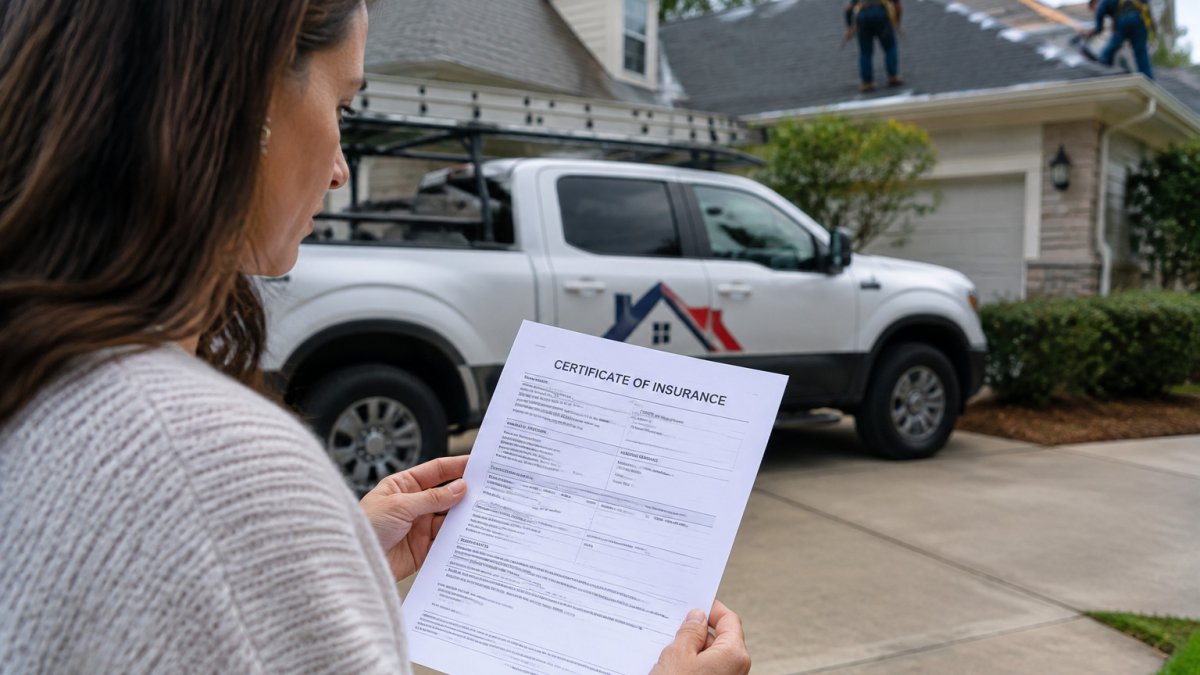
Ask for certificates of insurance and confirm them directly with the insurer. Confirm the policy is active and the coverage limits are adequate.
Workers’ compensation matters because an uninsured worker injured on your property can create a liability claim against you. Ask for proof of coverage before work begins.
- Look up the license on the state or county licensing board website
- Request a certificate of insurance and confirm it with the insurer
- Check that the policy dates cover the full project
Roofing Contractor Checklist: Questions to Ask Before You Hire
Use a written checklist so every candidate answers the same questions. Strong answers are specific. Vague answers are a warning sign.
Ask these questions:
- How many roof replacements have you completed in the past year?
- Who will supervise my project, and will they be on site daily?
- Which shingle or roofing brands do you install, and which manufacturer warranties apply?
- Who pulls the building permit, and who handles inspections?
Be wary of any contractor who cannot answer these questions clearly.
Roof Replacement Estimate Comparison: Comparing Written Bids Side by Side
Get at least three written estimates. For a practical checklist on licensing, insurance, reviews, estimates and warranties, see how to compare remodeling contractors effectively. Verbal quotes are hard to compare and easy to dispute later. A written bid should list the project scope, materials, tear-off work, disposal, permits, and payment schedule. The problem is that three bids can look identical on the bottom line while covering very different work.
Build a Bid-Comparison Worksheet
Create one row per bid and one column per scope item. Fill in each contractor’s answer exactly as written in their proposal. If a bid is silent on an item, write “not included” rather than assuming it is covered.
- Tear-off and disposal: Is removal of the existing roof layers included? How many layers? Is dumpster rental and landfill disposal a separate line item?
- Decking and sheathing: Is replacing damaged or rotted decking included, and at what per-sheet price? What is the allowance, if any?
- Underlayment: Which product is specified, synthetic, felt, or a peel-and-stick membrane, and over what area?
- Ice and water shield: Is it included at eaves, valleys, and penetrations, or only at the eaves?
Normalize the Bids Before You Compare Price
A low bid is often low because it excludes items the other bids include. Add the missing items at a realistic allowance before you compare totals.
Ask each contractor to explain any difference greater than about 15 percent between their bid and the others.
Watch out: a bid that lists a single lump-sum price with no line items gives you nothing to compare and nothing to enforce later; ask for an itemized proposal before you consider it.
Compare Warranties on the Same Basis
Warranty terms are part of the bid, not an afterthought. Record the manufacturer’s material warranty length and the contractor’s workmanship warranty length side by side.
Pricing depends on roof size, pitch, material choice, and local labor costs. For current pricing, request a written estimate from Madrid’s Contracting or any other provider.
The article’s bid-comparison worksheet breaks down the scope items to check on every written estimate before comparing price.
| Scope item | What to check | Why it matters |
|---|---|---|
| Tear-off and disposal | Layers removed, dumpster and disposal included | Often billed separately |
| Decking and sheathing | Rotted decking replacement and per-sheet price | Hidden cost if not specified |
| Ice and water shield | Eaves only, or valleys and penetrations too | Scope differs between bids |
| Flashing | Replaced or reused | Reused flashing causes later problems |
| Permits and inspections | Fee in bid or billed separately | Changes the true total |
| Workmanship warranty | Length and transferability | Pairs with manufacturer warranty |
| Price variance | Explain any gap above about 15 percent | Signals missing scope or material grade |
Roofing Contractor Red Flags and Contract Terms to Confirm Before Signing
Watch for these red flags:
- Pressure to sign the same day or a “special price” that expires quickly
- A large deposit requested before any materials are ordered
- No physical business address or no local references
- Reluctance to show insurance or license numbers
Contract Checklist: What Must Be in Writing
Before you sign, confirm the contract includes each of the following. If an item is missing, ask for it to be added in writing.
- Full scope of work: The specific work to be performed, including tear-off, decking replacement allowance, underlayment, flashing, ventilation, and cleanup.
- Materials and product specifications: Brand, product line, color, and warranty tier for shingles and accessories.
- Start and completion dates: A scheduled start date and a substantial-completion date, plus how weather delays are handled and communicated.
- Permits and inspections: Who pulls the permit, who pays the fee, and who schedules the final inspection.
Change Orders and Payment Milestones
A change order is any modification to the original scope, price, or schedule. Common triggers are discovered decking rot, added ventilation, upgraded shingles, or a chimney flashing rebuild.
Tie payments to completed milestones rather than to calendar dates. Paying the full balance before the final inspection and cleanup leaves you with little leverage if punch-list items remain.
Watch out: a contract that lists a total price but no payment schedule, no start date, and no change-order process gives you almost nothing to enforce if the job stalls or the scope shifts.
Storm Damage and Insurance-Related Work
If storm damage is involved, confirm how the contractor works with your insurance company and whether they will help document the claim. Be cautious of any promise to waive your deductible or guarantee a specific insurance payout. Keep copies of every estimate, every change order, and every signed document.
Scheduling Your Consultation and Requesting a Free Estimate
Once you have narrowed your list, schedule an in-home consultation with your top two or three choices. A good contractor will inspect the roof, check the attic for ventilation issues, and explain what they find in plain language.
Madrid’s Contracting offers free estimates for roofing, repair, and remodeling work across Anne Arundel County and nearby areas. You can request a free estimate or call to schedule your consultation.
If you need help with an insurance-related roof claim, see our guide to filing a storm damage roof claim for documentation tips and next steps.
Frequently Asked Questions
What questions should I ask a roofing contractor before hiring?
Ask how long the company has operated under its current name, whether it holds a valid state or local roofing license, and whether it carries general liability insurance and workers’ compensation. Ask who will supervise the crew on your roof, what the tear-off and disposal process includes, and whether the company pulls permits. Request references from recent residential roof replacements and ask how the contractor handles change orders and communication during the job. Get the answers in writing before you compare prices.
How can I compare roof replacement estimates?
Make sure each bid covers the same scope: tear-off of existing shingles, underlayment, flashing, ventilation, disposal, and cleanup. Compare the shingle brand, product line, and warranty terms, including both the manufacturer warranty and the contractor’s workmanship warranty. Check the payment schedule and any deposit amount. A much lower bid often leaves out items such as drip edge, new flashing, or permit fees, so line-by-line comparison matters more than the total.
How do I verify a roofing contractor’s license and insurance?
Look up the contractor’s license on your state’s licensing board website, and confirm the license is active and in the correct classification. Ask for a current certificate of liability insurance and call the insurance agent listed on it to confirm the policy is active. Also request proof of workers’ compensation coverage, since an uninsured crew injury on your property can create liability for you. Check your local building department for any additional registration requirements.
What are the red flags to watch for when hiring a roofer?
Be cautious of contractors who demand a large cash deposit, pressure you to sign the same day, or offer to waive your insurance deductible. Other warning signs include no physical business address, refusal to provide proof of insurance or a license, and a bid with no written scope. Door-to-door roofers who claim to have spotted damage they can fix immediately also deserve extra scrutiny. Any contractor who resists putting terms in writing is a reason to keep looking.

